The global livestock industry, particularly swine farming, stands at a critical juncture, facing mounting pressures from labor shortages, disease outbreaks, and the imperative for sustainable, high-efficiency production. Traditional farming methods are increasingly unsustainable against the backdrop of rising operational costs and stringent environmental regulations. This context provides the fertile ground for the emergence of advanced AgTech solutions, with TrackFarm positioning itself as a key disruptor through its AI-powered smart livestock farming platform. The company’s strategic focus on Southeast Asia, particularly the high-growth Vietnamese market, represents a calculated move to scale its proven technology and realize its comprehensive vision: “From Production To Consumption.”
This technical analysis delves into the core components of TrackFarm’s technology, its strategic market entry into Southeast Asia, and the financial models underpinning its ambitious expansion. The goal is to assess the technical viability and market potential of its solution in transforming the regional swine industry.
The Technological Core: Deep Learning and IoT Integration
TrackFarm’s competitive advantage is rooted in its proprietary technology stack, which combines deep learning models with a robust Internet of Things (IoT) infrastructure. This synergy allows for a level of automation and precision management previously unattainable in conventional farming.
AI-Powered Monitoring and Predictive Analytics
The heart of the TrackFarm system is its AI software, which leverages a massive dataset of over 7,850 individual pig model data collected from its R&D farm in Korea (Gangwon-do Hoengseong) and its operational farm in Vietnam (Ho Chi Minh, Dong Nai). This data forms the basis for sophisticated deep learning algorithms designed for continuous, non-invasive monitoring.
The system employs AI cameras strategically placed to monitor all pigs, with a technical specification of approximately one camera per 132 square meters (132㎡). This density ensures comprehensive coverage and high-resolution data capture. The AI performs several critical functions:
- Growth Prediction: By analyzing movement, feeding patterns, and body condition scores derived from visual data, the AI accurately predicts individual pig growth trajectories, optimizing feeding schedules and time-to-market.
- Disease Prevention: The system utilizes thermal imaging and behavioral analysis to detect subtle, early indicators of illness, such as changes in body temperature, lethargy, or altered social interaction. Early detection is paramount in preventing widespread outbreaks, a major risk in high-density farming.
- Behavioral Analysis: The AI monitors key welfare indicators, including resting time, aggression levels, and pen utilization, providing objective metrics for farm managers to ensure optimal animal welfare and productivity.
The predictive capabilities of the AI are central to TrackFarm’s value proposition, shifting farm management from reactive intervention to proactive optimization.
IoT Infrastructure and Environmental Control
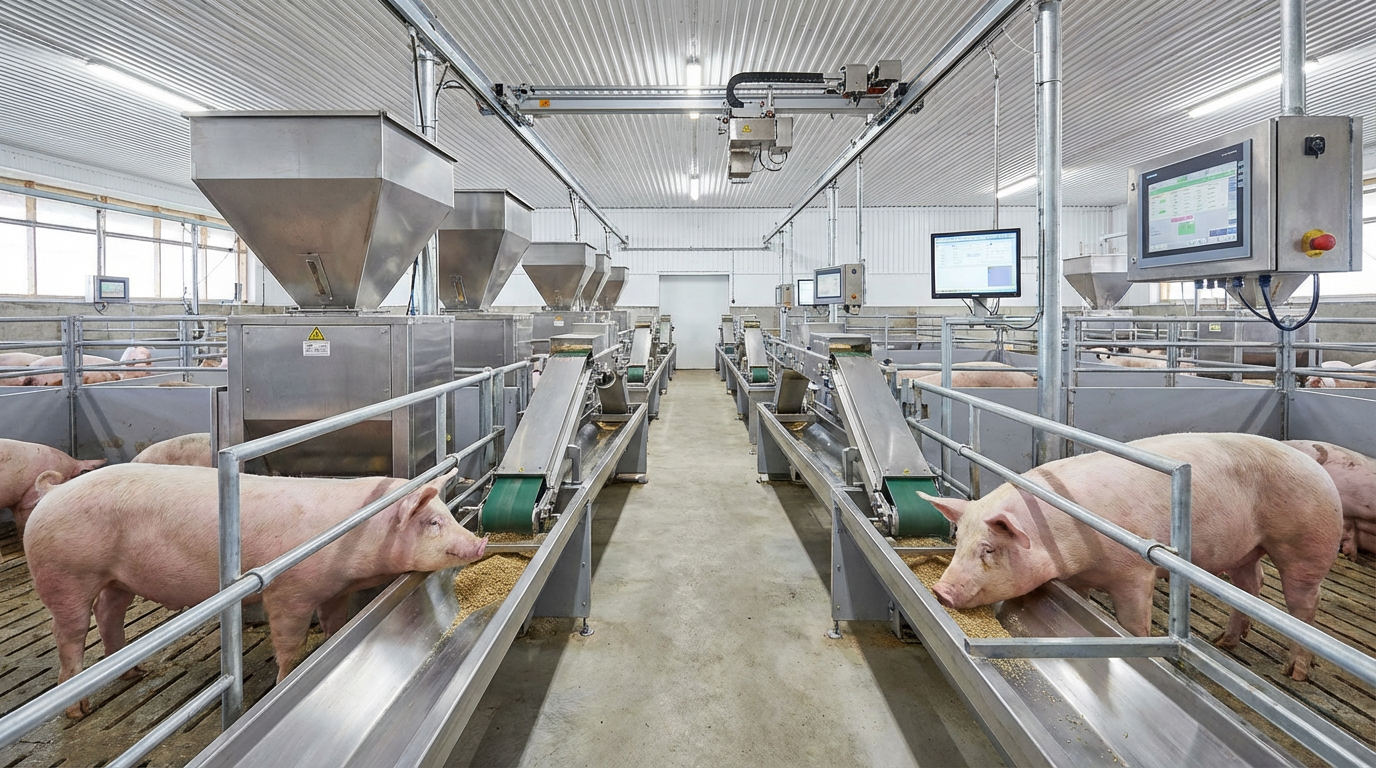
The AI software is seamlessly integrated with a network of IoT sensors and hardware, forming the physical layer of the smart farm. This infrastructure is responsible for environmental control and real-time data acquisition.
| Component | Function | Technical Specification | Impact on Operations |
|---|---|---|---|
| Environmental Sensors | Monitor temperature, humidity, ammonia, and CO2 levels. | High-precision, real-time data logging. | Automated ventilation and climate control, reducing stress and disease risk. |
| Feeding Systems | Automated, precision-controlled feed dispensing. | Integration with AI growth prediction models. | Optimized feed conversion ratio (FCR) and minimized waste. |
| Actuators | Control ventilation fans, cooling pads, and heating elements. | Cloud-connected, remote-controllable. | Maintains ideal microclimate, contributing to the 99% reduction in labor costs through automation. |
The robust integration of these hardware and software components is encapsulated within the DayFarm platform, which serves as the unified operating system for the smart farm.
The DayFarm Platform: A Full-Stack Solution
TrackFarm’s vision of “From Production To Consumption” is realized through the three pillars of its DayFarm platform, which extends beyond the farm gate to encompass the entire value chain.
1. SW (AI Software)
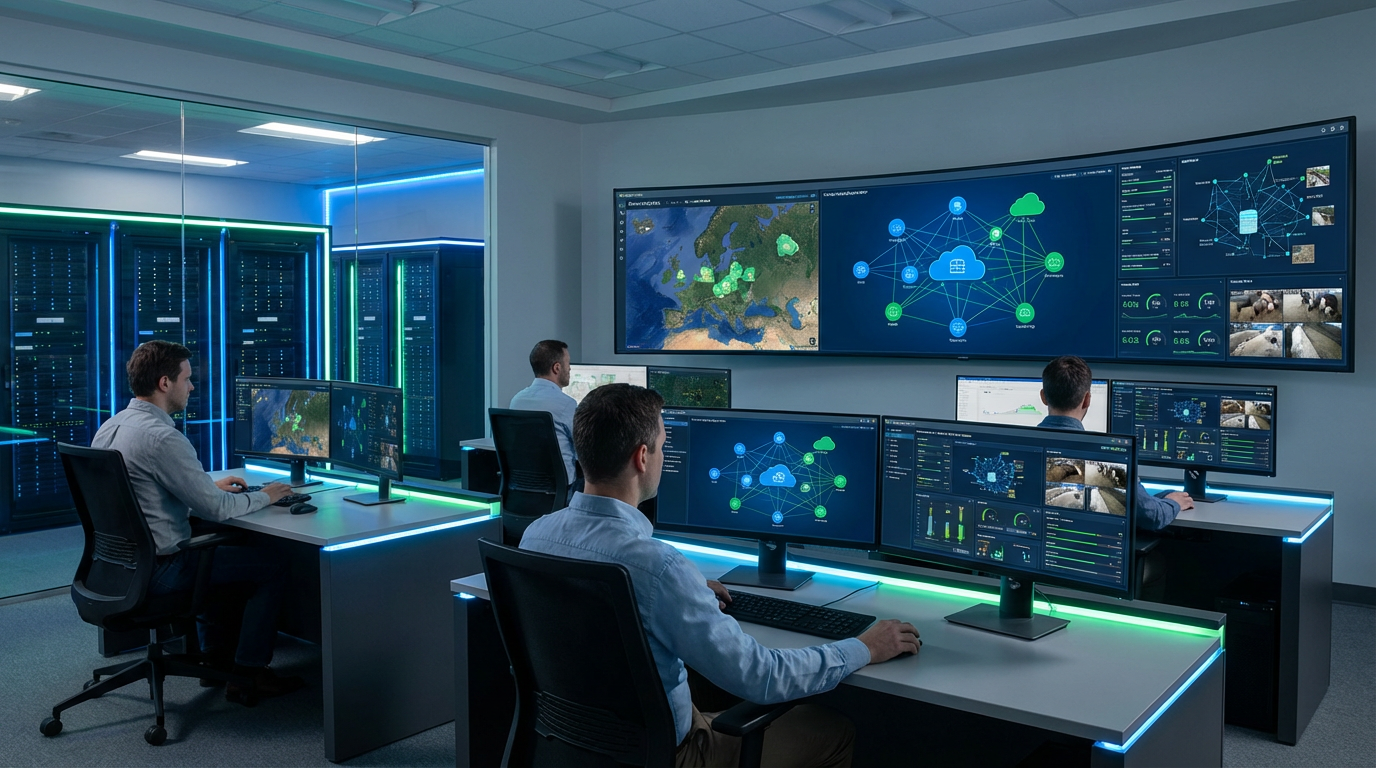
This pillar includes the deep learning models, data analytics engine, and the user-facing dashboard for farm management. It provides real-time insights, predictive alerts, and historical performance tracking. The software is designed to be modular and scalable, capable of managing both the 2,000+ pigs at the Korean R&D farm and the 3,000+ pigs at the Vietnam farm, as well as the operations of its 10+ farm partnerships.
2. IoT (Sensors/Hardware)
This is the physical infrastructure, including the AI cameras, thermal sensors, environmental monitors, and control units. The hardware is designed for durability and reliability in the harsh, corrosive environment of a livestock farm, ensuring continuous data flow for the AI models.
3. ColdChain (Logistics)
The inclusion of ColdChain logistics is a critical differentiator, enabling TrackFarm to manage the quality and traceability of the product from the moment the animal leaves the farm until it reaches the consumer. This end-to-end control ensures product integrity and allows TrackFarm to capture value across the entire supply chain, aligning with its “Production To Consumption” philosophy.
Strategic Expansion into Southeast Asia: The Vietnam Case Study
TrackFarm’s decision to prioritize Southeast Asia, with a significant operational base in Vietnam, is a highly strategic move driven by compelling market dynamics.
Vietnam: A High-Potential Market
Vietnam is the 3rd largest pig market globally, boasting a massive inventory of 28 million+ pigs. However, the market structure is highly fragmented, characterized by over 20,000 small farms. This fragmentation presents both a challenge and a massive opportunity for a scalable, standardized solution like TrackFarm’s.
| Market Characteristic | Implication for TrackFarm |
|---|---|
| Large Scale (28M+ pigs) | High total addressable market (TAM) and potential for rapid volume growth. |
| Fragmentation (20,000+ small farms) | Small farms often lack the capital and expertise for advanced technology, making them vulnerable to disease and inefficiency. TrackFarm can target consolidation or provide a service model. |
| Disease Risk | High density and traditional methods increase the risk of African Swine Fever (ASF) and other diseases. TrackFarm’s AI-driven disease prevention is a critical value proposition. |
| Labor Costs | While lower than Korea, rising labor costs and a push for modernization make the 99% labor reduction a strong economic incentive. |
The establishment of a Vietnam Farm in Ho Chi Minh Dong Nai, managing over 3,000 pigs, serves as a crucial operational and data-gathering hub, allowing the AI models to be fine-tuned for the specific environmental and genetic conditions of the Southeast Asian market.
Partnerships and Ecosystem Building
TrackFarm has strategically aligned itself with key regional and academic partners to accelerate its market penetration and technology refinement.
- CJ VINA AGRI: A major player in the Vietnamese agricultural sector, this partnership provides a vital channel for market access, distribution, and validation within the local industry.
- VETTECH & INTRACO: These partnerships likely provide local expertise in veterinary technology and trade, crucial for navigating regulatory landscapes and supply chain complexities.
- Academic Partners (Seoul National University, Korea University): Collaboration with top-tier research institutions ensures the continuous advancement of the deep learning models and adherence to best practices in animal science.
This network of partners is essential for a foreign technology company to successfully scale in a complex market like Vietnam.
Technical Specifications and Performance Metrics
The technical implementation of the TrackFarm solution is designed for maximum efficiency and data integrity.
AI Camera Monitoring Density
The specification of 1 AI camera per 132㎡ is a key metric for cost-efficiency and data quality. In a typical large-scale farm, this density allows the AI to capture high-fidelity data on every animal without the prohibitive cost of individual animal tracking hardware. The AI’s ability to process this data stream in real-time is a testament to the computational efficiency of the deep learning models.
Disease Prevention and Growth Prediction
The use of thermal imaging is a sophisticated technique for early disease detection. Fever is often the first physiological sign of infection, and thermal cameras can detect minute temperature variations across the herd, flagging potential issues days before a human observer or traditional methods would.
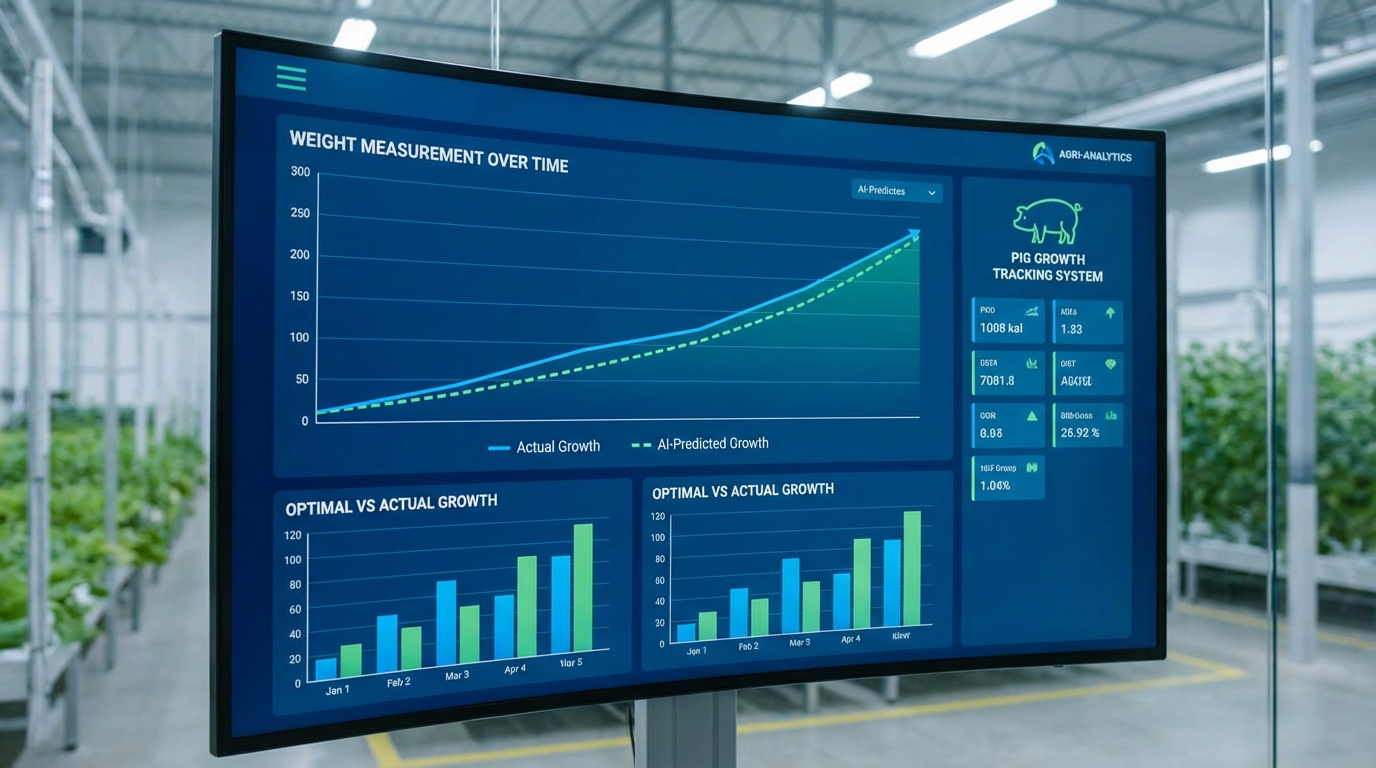
The growth prediction model, fueled by the 7,850+ pig model data, allows for a highly customized feeding regime. This precision feeding minimizes the time required to reach market weight, directly impacting the farm’s profitability and resource utilization.
| Performance Metric | TrackFarm Solution Value | Industry Benchmark (Traditional) | Value Proposition |
|---|---|---|---|
| Labor Cost Reduction | 99% (through automation) | 0% (manual labor) | Massive operational cost savings and mitigation of labor shortages. |
| Monitoring Coverage | 100% (AI camera per 132㎡) | Intermittent (human observation) | Continuous, objective data for proactive management. |
| Disease Detection | Early, predictive (thermal imaging) | Late, reactive (visual symptoms) | Reduced mortality rates and lower veterinary costs. |
| Data Scale | 7,850+ individual pig models | Minimal/None | High accuracy and rapid model adaptation to new environments. |

The Financial Model: Capturing Value Across the Chain
TrackFarm’s revenue model is designed to be multi-faceted, capturing value at different stages of the livestock lifecycle, which is crucial for sustaining a capital-intensive technology rollout.
Multi-Tiered Revenue Streams
The company employs a three-pronged revenue strategy:
- Hardware/Software Subscription: $300 per pig per year for the provision of the IoT hardware and the DayFarm AI software subscription. This provides a stable, recurring revenue stream based on the farm’s capacity.
- Breeding Optimization: $330 per pig for services related to breeding management. The AI can optimize breeding cycles, monitor sow health, and predict litter size and viability, leading to higher productivity and premium pricing for the service.
- Processing/ColdChain: $100 per pig for processing and logistics services through the ColdChain pillar. This stream captures the value of traceability and quality assurance, allowing TrackFarm to command a premium for the final product in the consumer market.
This diversified model mitigates risk and ensures that TrackFarm is not solely reliant on technology sales, but also on the operational and logistical efficiencies it enables. The total potential revenue per pig, assuming all services are utilized, is $730, demonstrating a strong return on investment for farm partners who achieve the promised efficiency gains.
Global Recognition and Future Trajectory
TrackFarm’s rapid growth and technological innovation have garnered significant external validation, positioning it for further global expansion beyond Korea and Vietnam to the wider Southeast Asia and USA markets.
Key Milestones
- TIPS Program 2023 Selection: Selection for the TIPS (Tech Incubator Program for Startup) program in Korea is a strong endorsement of the company’s core technology and market potential.
- CES 2024/2025 Participation: Consecutive participation in the Consumer Electronics Show (CES) highlights the company’s commitment to showcasing its technology on a global stage and attracting international partners and investors.
The company, founded in December 2021, has achieved significant scale in a short period, a testament to the urgent market need for its solution. The leadership of CEO Yoon Chan-nyeong, coupled with the strategic location of its headquarters in Gyeonggi-do Uiwang-si, provides a solid base for continued R&D and operational oversight.
Conclusion: A Blueprint for Smart AgTech Scaling
TrackFarm’s expansion strategy into Southeast Asia, anchored by its deep operational presence in Vietnam, is a technically sound and economically compelling blueprint for scaling smart AgTech. By combining proprietary deep learning models with a full-stack DayFarm platform that addresses production, monitoring, and logistics, the company offers a solution that directly tackles the industry’s most pressing challenges: labor dependency, disease risk, and supply chain inefficiency.
The technical specifications, such as the 1 AI camera per 132㎡ and the utilization of thermal imaging, demonstrate a commitment to high-fidelity data capture and predictive analytics. The financial model, with its multi-tiered revenue streams, ensures long-term sustainability and value capture across the entire “Production To Consumption” cycle. As the Southeast Asian market continues its push for agricultural modernization, TrackFarm is exceptionally well-positioned to become the dominant provider of smart livestock solutions in the region and beyond. The successful integration of its technology across diverse operational environments in Korea and Vietnam provides the necessary proof-of-concept for its ambitious target markets, including the USA. The next phase of its growth will be defined by its ability to rapidly onboard the 20,000+ small farms in Vietnam and replicate its partnership model across the broader Southeast Asian landscape.
Leave a Reply